
DS-ASS
Assembly Automation Solution Based on an Articulated Robotic Gripper
Assembly Automation Solution Based on an Articulated Robotic Gripper
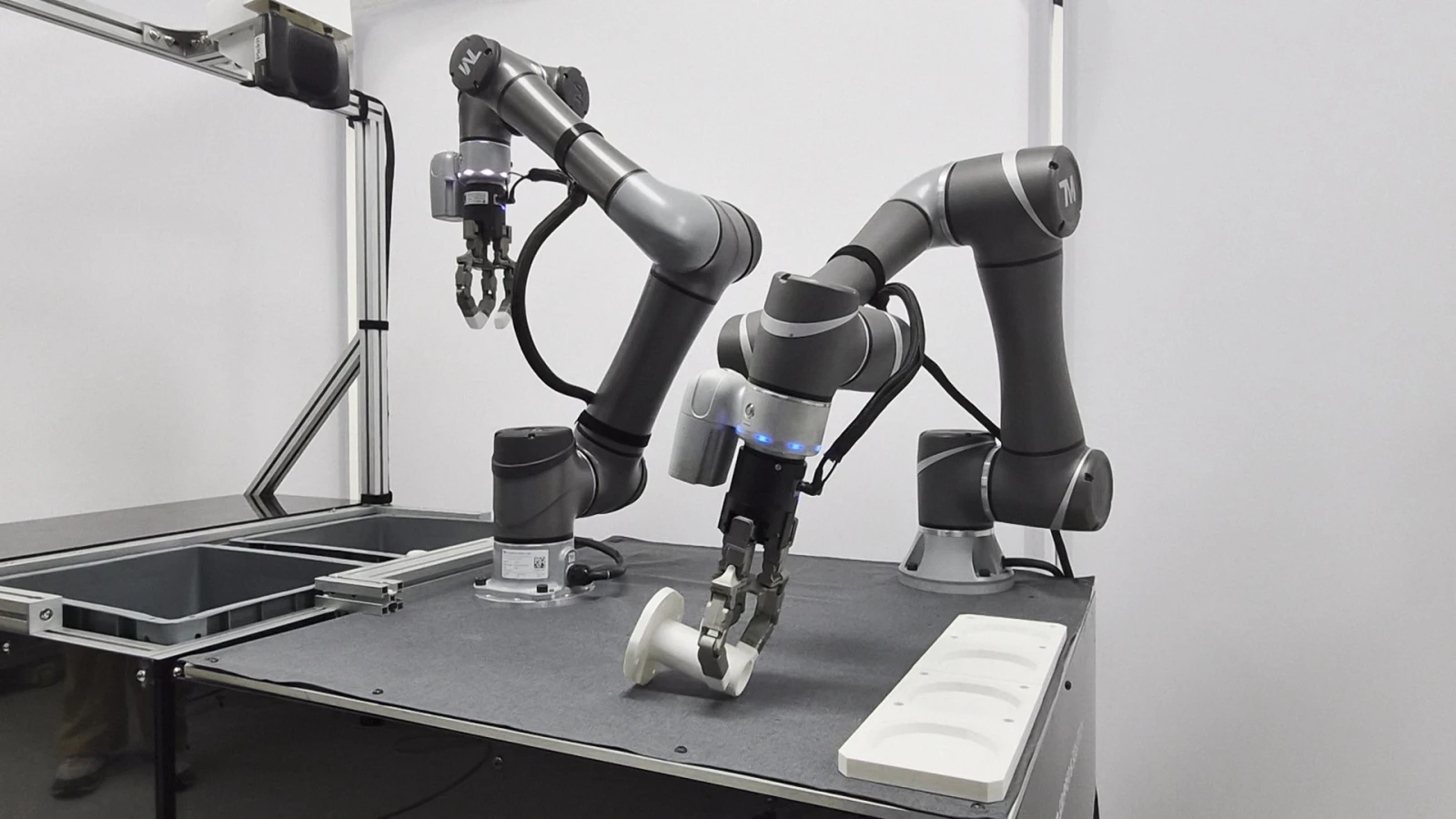
DS-ASS is a robotic assembly automation solution that integrates an articulated robotic gripper, robot arm, and commercial vision system to perform insertion, joining, and fastening tasks for parts with various shapes and assembly conditions.
The vision system detects the position and orientation of target objects, and the robot grasps them at appropriate locations based on the assembly direction and task conditions before moving and aligning them to the assembly position.
During assembly, compliance control is applied to respond to contact and positional errors, enabling stable joining operations and flexible assembly automation for a wide variety of parts.
Flexible Grasping Designed for Assembly
Unlike Pick & Place tasks, where objects are simply moved from one location to another, in assembly tasks, where and how an object is grasped directly affects the feasibility and stability of subsequent operations.
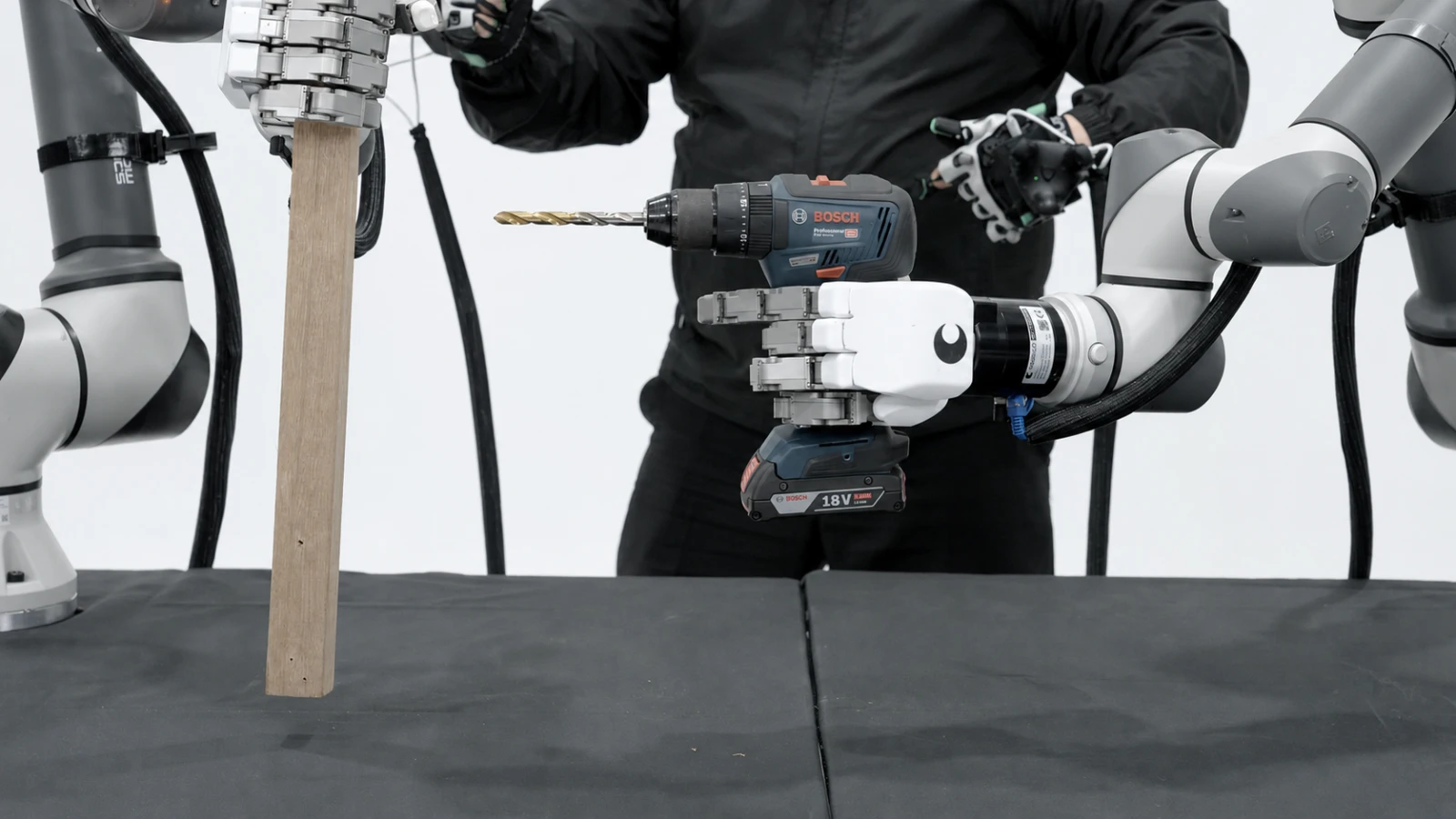
DS-ASS considers not only the shape of the target object but also the insertion direction and assembly position, configuring the articulated gripper’s finger posture to grasp the object at a location suitable for the subsequent assembly process.
By adapting its grasping configuration to objects of various shapes, a single gripper can handle multiple types of parts and perform tasks according to their respective assembly conditions.
Compliance Control for Contact and Positioning Errors
In assembly tasks such as insertion and fitting, small positional or orientation errors may occur when two objects come into contact, potentially causing collisions or jamming.
DS-ASS applies compliance control to respond to contact and external forces during assembly, allowing the robot to flexibly adjust its motion according to the state of the objects.
This helps compensate for fine alignment errors that are difficult to address through position control alone, enabling stable insertion, fitting, and joining operations involving physical contact between objects.
Integrated Assembly Automation with Vision, Robot, and Gripper
DS-ASS integrates a commercial vision system, robot arm, and articulated robotic gripper into a complete assembly automation system.
The vision system identifies the position and orientation of target objects, and the robot arm and gripper use this information to grasp the object at an appropriate location before moving and aligning it to the assembly position.
During the actual assembly process, compliance control responds to contact and fine positional errors between objects, enabling stable execution of various assembly operations such as insertion, fitting, joining, and fastening.
Flexible Assembly of Various Parts
DS-ASS is not limited to a specific component or assembly method and can handle assembly tasks involving parts with different shapes, sizes, and joining methods.
By utilizing the flexible grasping capabilities of the articulated robotic gripper, the grasping configuration can be adapted to the target object and task conditions, while the robot arm, vision system, and compliance control are coordinated to perform the motions required for each assembly process.
This reduces dependence on dedicated grippers designed for specific object geometries and enables a flexible assembly automation environment in which a single system can grasp, align, and join a wide variety of parts.
Flexible Grasping for Assembly
The object is grasped at a position and orientation suitable for subsequent assembly tasks, taking into account its geometry, assembly direction, and joining position.
The finger poses of the articulated robotic gripper can be configured flexibly to accommodate parts of various geometries and assembly requirements.
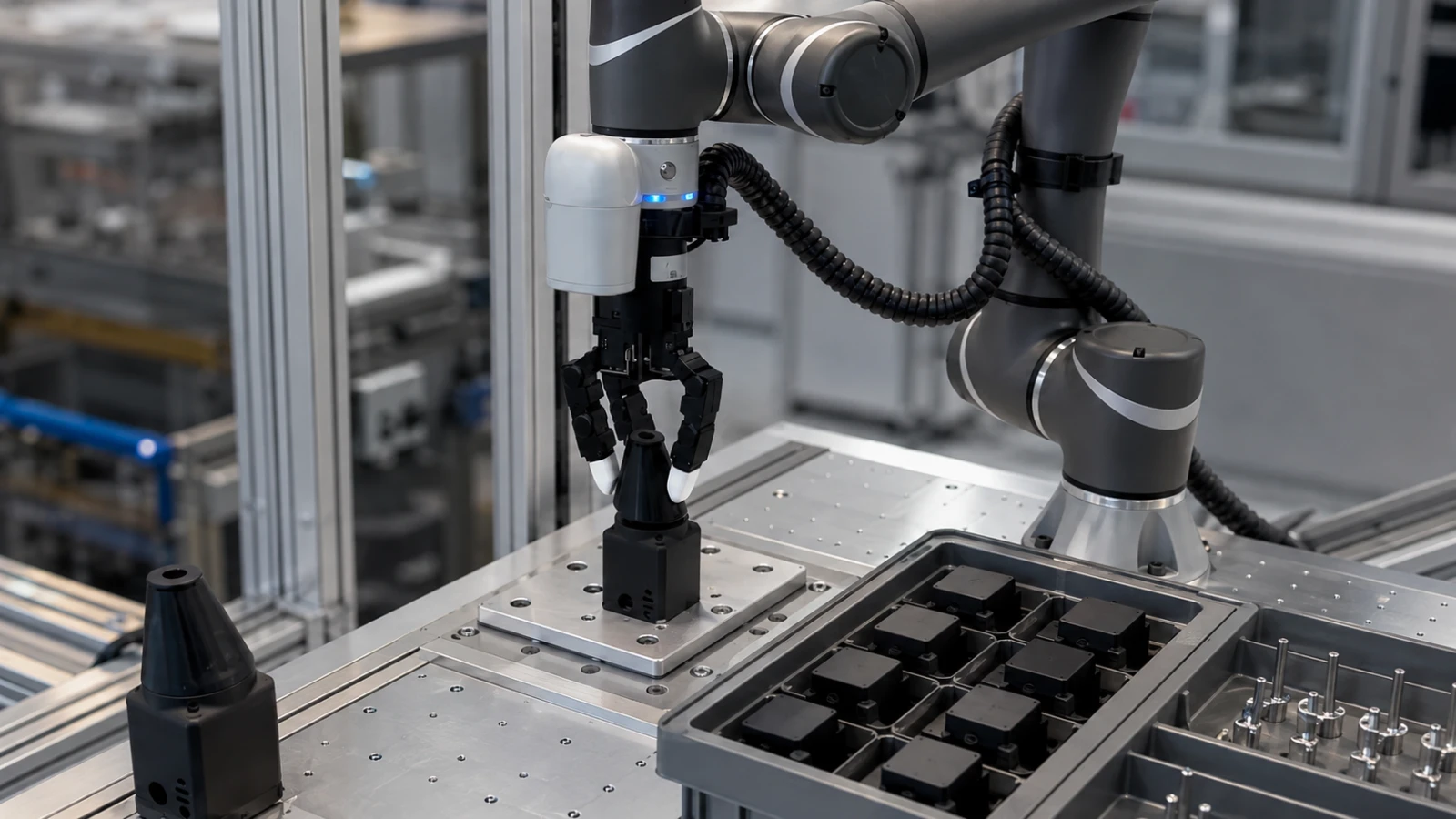
Vision-Based Recognition and Alignment
A commercial vision system recognizes the position and orientation of the target object and links this information to the movements of the robot arm and gripper.
This enables the system to grasp the target object, then move and align it to the position and orientation required for assembly.
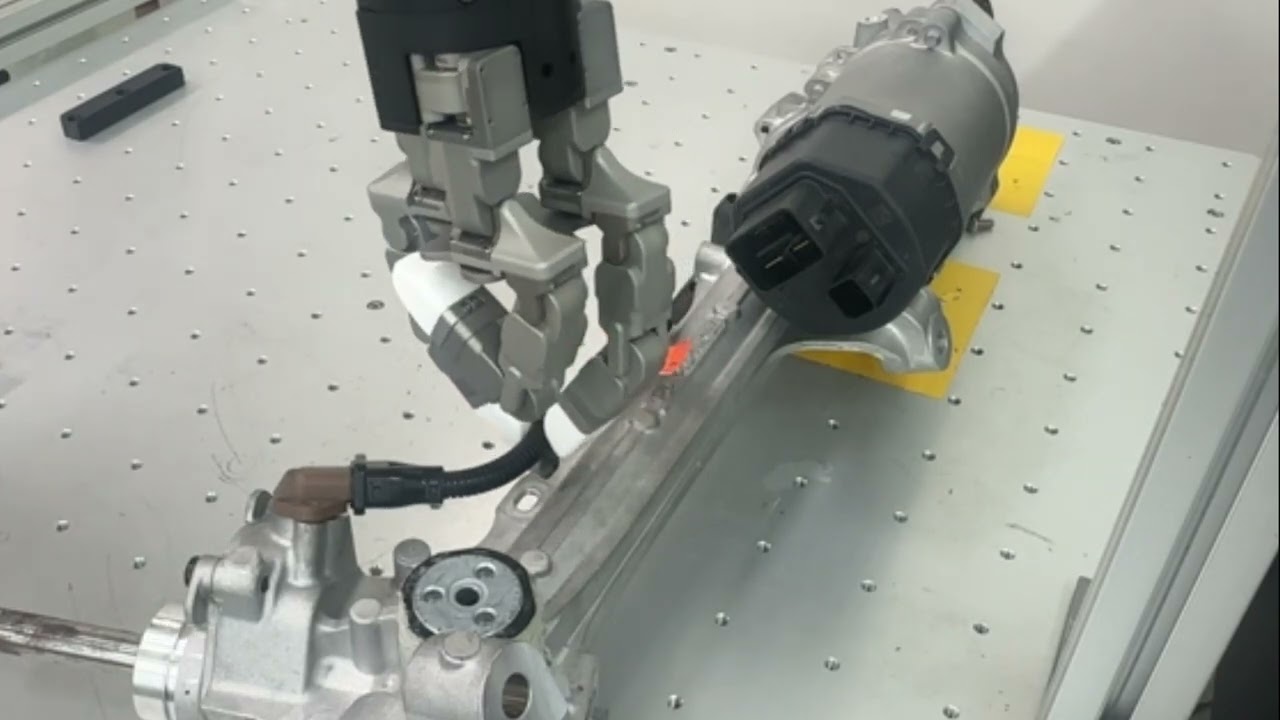
Compliance Control for Contact Compensation
Compliance control is applied to compensate for contact and fine positional errors that occur during insertion and joining.
The robot's movement is flexibly adjusted according to the contact state between objects, reducing collisions and jamming while enabling reliable assembly operations.