

[On the Front Lines of Industry – Tesollo] A Robot Craftsman Building the “Midas Touch” Robotic Hand
No matter how sophisticated a robot arm may be, it is useless if the “hand” does not function properly. For robots to carry out real work on industrial sites, the role of the “hand” that grasps, turns, and assembles objects is just as crucial as mobility. Tesollo is a startup specializing in what could be called the “Midas robotic hand” that turns ordinary robots into truly valuable workers.
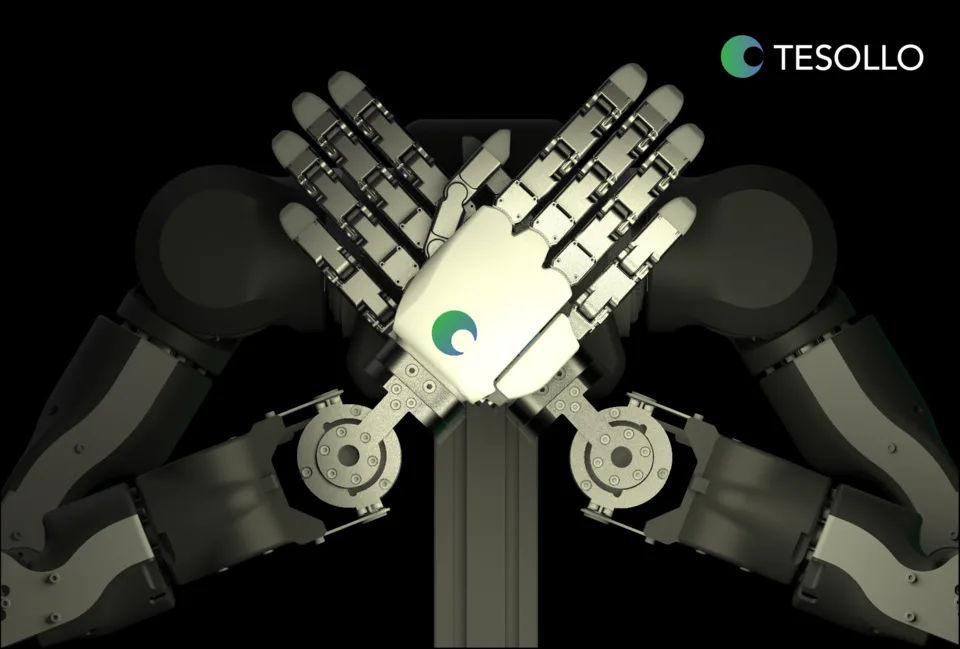
Founded in 2019 by CEO Kim Youngjin, Tesollo develops end-of-arm tooling (EOAT) such as grippers and robotic hands that serve as the human hand of a robot. Established by Kim after his time at the Korea Institute of Industrial Technology (KITECH), the company holds original technologies for multi-joint robotic hands that mimic the human hand. Based on these capabilities, Tesollo is researching and developing solutions that can grasp and manipulate a wide variety of objects.
“Within the robotics industry, the gripper is the key element that allows robots to perform real tasks,” Kim emphasizes. “Tesollo has been single-mindedly digging into multi-joint gripper technology, giving robots the practical value of a ‘hand’ and growing step by step along that path.”
◇ 45% Compound Annual Growth – The “Golden Time” of the Humanoid Market
One of Tesollo’s core target markets is humanoid robots, a field expected to grow explosively. According to global market research firm Fortune Business Insights, the humanoid robot market is forecast to expand from 2.43 billion dollars in 2023 to 66 billion dollars (about 9.7 trillion won) by 2032, an astonishing compound annual growth rate of 45.5%.
As labor shortages intensify across manufacturing, logistics, healthcare, and service industries, demand for humanoids is expected to surge alongside traditional industrial automation robots.
Of course, existing industrial automation demand is also firmly within Tesollo’s sights. Today’s automation technology already covers a significant portion of standardized, repetitive tasks. However, processes that involve a wide variety of non-uniform objects, or complex tasks such as assembly and packing, remain difficult to automate. In the automotive sector, press, welding, and painting processes have automation rates close to 100%, yet assembly lines still rely heavily on human workers. In the electronics, semiconductor, and display industries, wafer and panel manufacturing is highly automated, but module assembly and packaging still involve a large amount of manual work.
This is precisely where Tesollo has focused its attention. While each industry has different production processes, the sections that resist automation share a common feature: they all require “grasping and manipulating objects of varying shapes.” For simple, single-purpose operations, existing grippers can still handle the work. But for workflows that involve multiple processes and diverse objects, Tesollo is convinced that multi-joint grippers offer superior productivity and cost efficiency—an insight that led to the company’s current business.
◇ The “Delto Gripper” Series – A One-Stop Solution
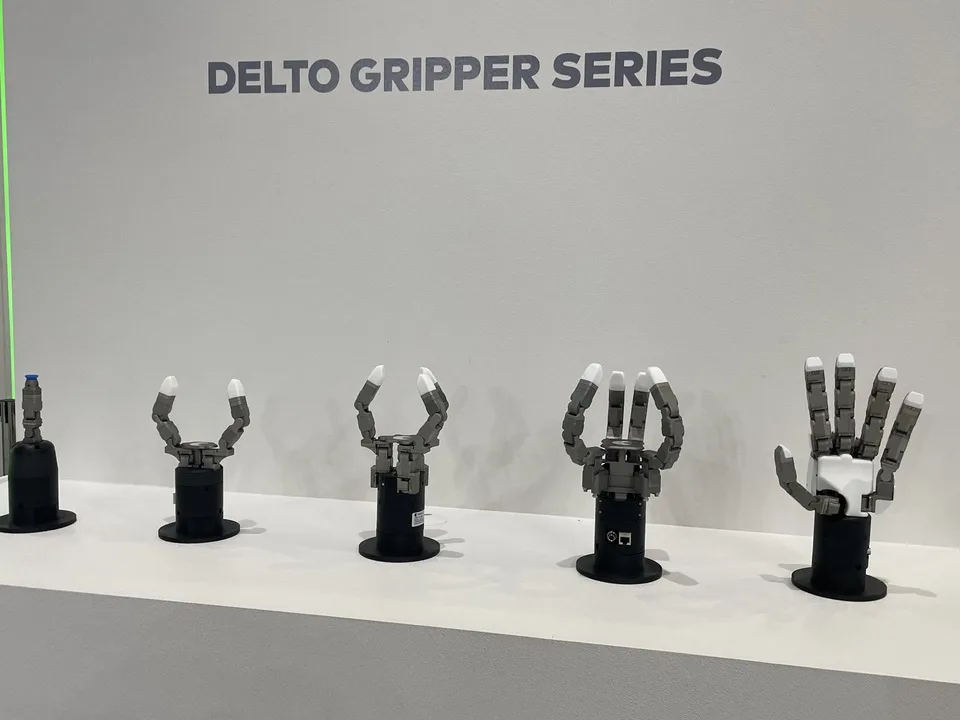
Tesollo’s core strength lies in the combination of its multi-joint robotic gripper manufacturing technology and control solutions. Under the brand name “Delto Gripper Line,” the company has built a diverse product portfolio ranging from one-finger to five-finger hands.
The most talked-about model recently is the humanoid robotic hand “DG-5F.” With an overall length of roughly 20 cm—similar to an adult male’s hand—and five fingers with a total of 20 joints (20 degrees of freedom), the DG-5F can precisely mimic human hand movements. Each joint is implemented as a single integrated module that combines motor, driver, encoder, and reducer, providing excellent manufacturability and maintainability. The hand delivers 0.1-degree repeatability and joint speeds of 75 rpm, meeting the performance requirements of industrial environments. Weighing just 1.6 kg, it can grasp objects up to 6 kg, and its control loop runs faster than 250 Hz to realize highly delicate finger motions. It has also passed durability tests exceeding two million cycles, demonstrating its reliability.
Tesollo has embedded advanced control technologies into the DG-5F, including a high-speed multidrop communication protocol, in-hand manipulation (object control within the hand), and force-based grasping algorithms. The system is designed to support various AI approaches such as sim-to-real transfer of models trained in simulation, imitation learning, and reinforcement learning.
The company’s mainstay three-finger gripper “DG-3F” adopts a direct-drive architecture with 12 joints, making it well suited to pick-and-place, bin-picking, assembly, fastening, and similar tasks. It can freely grasp a wide variety of irregular objects and is widely deployed in manufacturing and production lines. The “DG-3F05,” which received a Robotics Innovation Award at CES 2025, is capable of numerous grasping patterns and is designed to tackle manual operations on the factory floor.
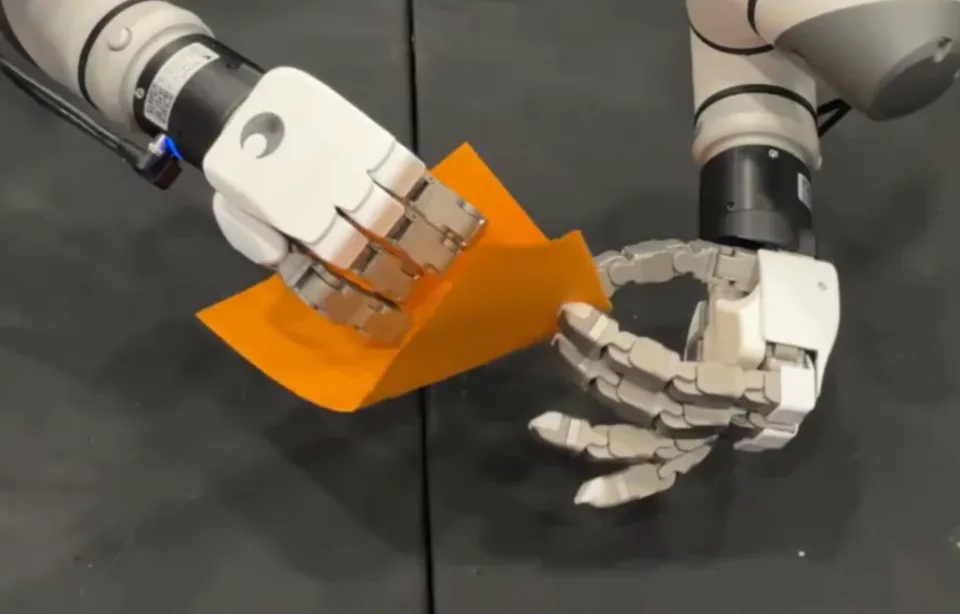
Another notable product, the four-finger gripper “DG-4F,” unveiled at “K-Display 2025” in August, drew attention for its live demonstration of automatically removing and reattaching protective films on display panels. The gripper’s four multi-joint fingers enable highly precise handling of fragile surfaces.
Beyond these, Tesollo offers a broad lineup that includes the two-finger gripper “DG-2F,” the vacuum gripper “DG-V,” and the single-finger module “DG-1F,” responding to diverse market needs. All products employ a modular design so that components can be swapped at the module level in case of failure, improving maintenance convenience.
◇ Hand in Hand With the Global Market
Tesollo is proving its technological prowess through collaborations with leading research institutes and major corporations at home and abroad. Internationally, the company supplies its products to top-tier organizations in 16 countries, including Sanctuary AI and the University of Toronto in Canada, AWL in the Netherlands, Novo Nordisk in Denmark, and Huawei in China. The DG-5F has been delivered to renowned research institutions such as Stanford University, ETH Zurich, and KAIST, solidifying its value as a cutting-edge research platform.
In Korea, Tesollo’s hands and grippers have been adopted by advanced R&D centers at Samsung Electronics, Samsung Display, LG Electronics, Hyundai Motor Company, Doosan, and HD Hyundai Robotics, as well as government-funded institutes such as the Korea Institute of Industrial Technology (KITECH), Korea Institute of Machinery & Materials (KIMM), and Korea Electronics Technology Institute (KETI).
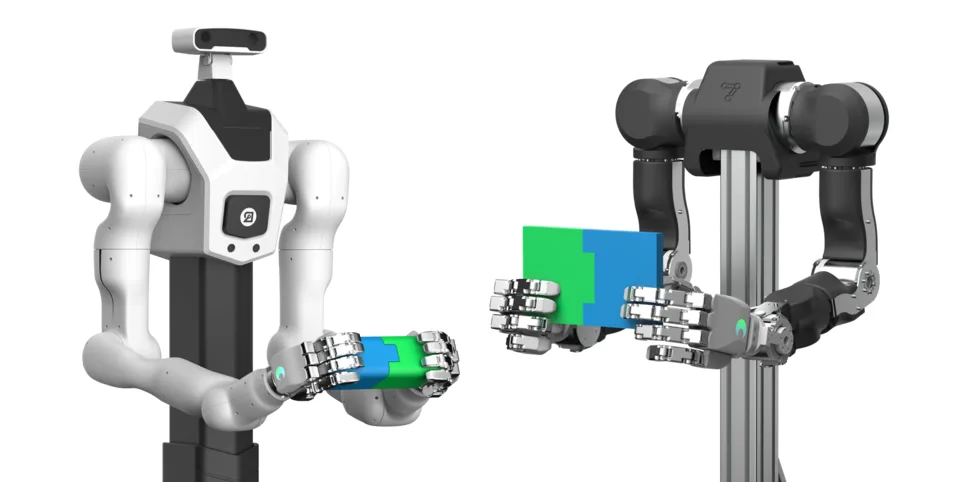
Recently, collaboration with global humanoid platforms has accelerated. At “ROBOTWORLD 2025,” Tesollo drew crowds with integrated demonstrations of the DG-5F mounted on Robin, a dual-arm AI humanoid from U.S. company RoboLynx (Roboligent), the OpenArm open-source robotic arm from Japan’s ENERTEK (Ennetic), and Adam-U, an upper-body humanoid platform from China’s PND Robotics. These demos effectively validated the versatility of Tesollo’s robotic hand across multiple robot platforms.
◇ Leading Global Standards as a Robotic-Hand Platform
Tesollo is looking beyond Robot-as-a-Service (RaaS) to what it calls “Robotic Hand as a Platform.” Its aim is to build an open interface ecosystem that integrates sensing, control, and tactile perception technologies into the robotic hand, in preparation for the upcoming expansion of humanoid robot users. To that end, Tesollo has adopted an open interface architecture that ensures compatibility with external force/torque sensors and tactile sensor modules, making it easy to integrate with a variety of humanoid platforms.
The company has also developed a plug-and-play package that combines a robotic hand and adapter compatible with humanoid robots from Unitree, a prominent Chinese humanoid robot maker.
On the market-strategy side, Tesollo is pursuing a differentiated supply approach tailored to demand. From high-end, premium humanoids like those of Tesla and Boston Dynamics to low-cost humanoids and wheeled mobile humanoids, Tesollo allows customers to selectively adopt either high-performance multi-DOF grippers or simpler, low-DOF grippers depending on the form factor and use case.
◇ A String of Awards Underscoring Proven Technology
Tesollo’s technical capabilities have been recognized through a series of awards. In January, the DG-3F05 received a Robotics Innovation Award at CES 2025. In February, the company was selected for Samsung Electronics’ startup acceleration program “C-Lab Outside.” In April, it was named a key robotic-component company within the government-backed K-Humanoid Alliance under the Ministry of Trade, Industry and Energy, and later earned another Innovation Award at World IT Show 2025.
The company was also chosen for the Ministry of SMEs and Startups’ “Super-Gap Startup 1000+” program and will receive up to 1.1 billion won in commercialization and R&D funding over three years.
In particular, Tesollo’s DG-5F was named a finalist in the “Technology Innovation Award” category at the Humanoid Robotics Industry Awards 2025 in the U.K., standing shoulder to shoulder with global tech giants such as NVIDIA and Agibot, and showcasing the potential of Korean robotics technology to the world. More recently, the DG-5F was selected as one of the “Top 10 Mechanical Technologies of the Year 2025” by the Korea Federation of Mechanical Engineering Societies.
◇ The Start of a J-Curve Takeoff
After moving from technology and product development into successful market entry, Tesollo expects to double its sales this year compared with last year. Building on this growth trajectory, the company aims to triple revenue next year by simultaneously expanding the domestic market and accelerating its global push.
In June, Tesollo raised 6 billion won in a Series A funding round to speed up its advance into the humanoid robot market. With existing investors such as KB Investment, VHI Investment, and The Invention Lab joined by new investors including Enlight Ventures, Samsung Ventures, and POSCO Technology Investment, the company’s cumulative funding has reached 8.5 billion won. Tesollo plans to leverage its performance in both domestic and overseas markets to go public (IPO) around 2027–2028.
“The goal of the Delto Gripper is to implement human-level precision and tactile perception in industrial robots,” says CEO Kim. “By pushing ahead with the global standardization of Korean multi-joint robotic hands, we will become the company that earns the world’s trust first in this field.”
[Interview] CEO Kim Youngjin
“Firmly Gripping Global Robot-Market Demand”
“With top-tier global competitiveness in robotic hands and grippers, we want to see Tesollo’s products mounted on Tesla’s humanoid robots.”
Kim Youngjin is widely regarded as one of the most notable young leaders in the robotics industry today. After majoring in robotics at the University of Science and Technology (UST), he worked at KITECH, where he became frustrated watching research成果 in robotics fail to reach commercialization. Convinced of the growth potential of the robotics industry, he decided to start a company.
Named one of Forbes’ “30 Under 30 Asia” in 2019, Kim has been drawing attention as a key figure shaping the EOAT landscape across research, industrial, and collaborative robots.
Tesollo is now competing head-on in the robotic-hand market with long-established global players such as Shadow Robot in the U.K., Robotiq in Canada, and Schunk in Germany.
“When you consider that most tasks performed by humanoid robots are completed with the hands, the reliability of multi-joint robotic hands is absolutely critical,” he explains. “It is essential to develop products that provide the right forces and characteristics optimized for different work environments and manipulation tasks.”
For example, a humanoid robot that opens a cap under the vehicle hood and then picks up a fuel pump to refuel the car must be able to execute those very different motions with a single robotic hand. Compared with using multiple dedicated grippers or separate robots, this approach can deliver clear advantages in both productivity and cost.
“Starting next year, you will see Tesollo’s robotic hands mounted on leading humanoid robots and industrial lines around the world,” he says. “We are currently in talks with two to three humanoid robot companies in the U.S. and China about joint development and supply agreements.” Tesollo is also discussing the development and supply of robotic hands for upper-body humanoids with Techman Robot, one of the global big three in collaborative robots.
“With gripper technology that consistently creates new and reliable value for every robot we touch, Tesollo will firmly ‘grip’ global robot-market demand and move forward,” Kim declares.
Source: Robot Newspaper (irobotnews.com)